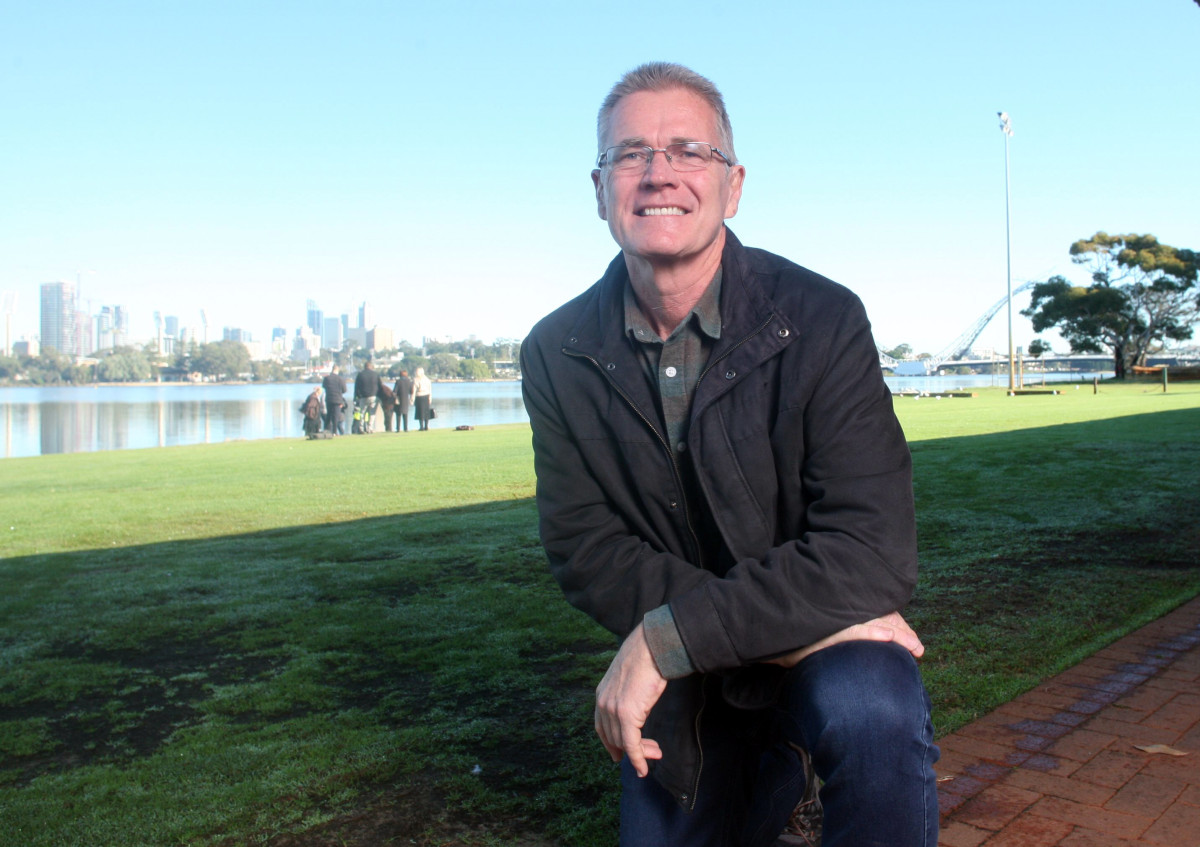

Andrew N Thompson
Dr Andrew Thompson graduated in Agricultural Science from the University of Western Australia in 1989. Andrew grew up on a farm near Lake Varley in the wheat-sheep zone in southern Western Australia. His farm upbringing contributed to his systems thinking and passion for adoption of practical research outcomes. He started his career with the Western Australian Department of Agriculture based in Albany under the leadership of Dr Peter Doyle and played a key role within projects focused on intensive grazing strategies to manage micron, given huge premiums for finer wool at the time. The concept of using the amount of green feed on offer or FOO as a tool for making more informed pasture and sheep management decisions originated from this early work and these concepts are now embedded in everyday advice and management of sheep across Australia.
He moved to South Australia and completed a PhD at the University of Adelaide in 1996 focussed on genetic and nutritional management strategies to improve staple strength. Following his PhD, Andrew returned to Western Australia and the Department of Agriculture based in Katanning and continued working on management of wool quality, before moving to the Victorian Department of Agriculture based in Hamilton in 1999. The time at Hamilton involved Leadership roles within MLA funded R&D programs including Sustainable Grazing Systems and MoreLamb Quality Pastures, plus projects within the Salinity and Future Farm Industries CRCs including Sustainable Grazing of Saline Land and Evergraze. Most notable however was his role in initiating, developing and leading the national $10M AWI-funded Lifetime Wool project from 2000 to 2007.
Andrew commenced at Murdoch University in 2011, where he is now a Professor in Animal Production Science. Since then, he has developed an internationally recognised research group in sheep reproduction. His work has directly informed best‑practice management for improving lamb survival and mating ewe lambs and contributed significantly to understanding the roles of genetic fatness on sheep productivity and welfare, genetics for feed efficiency, methane production and feet health, climate resilience and the use of sensor technologies to improve animal welfare and labour efficiency.
Andrew’s career spans more than three decades, and throughout that time he has remained unwaveringly focused on one goal: improving the productivity, resilience and welfare of sheep enterprises through science that works on real farms. Nationally, he is best known for his leadership in sheep reproduction and lamb survival research. Over more than 25 years, he has been a central figure in transforming how the industry understands and manages ewe nutrition, reproduction and lamb survival. His leadership of the Lifetimewool project in the early 2000s laid the foundation for what has become one of the most influential research and development programs in the Australian sheep industry, Lifetime Ewe Management. This program has since been delivered to more than 5,000 sheep producers in Australia who manage around 40% of the national flock. Independent assessments have estimated the benefits of this program to exceed one billion dollars to the Australian economy – a remarkable example of research translated into lasting, industry‑wide change.
Across his career, Andrew has been a principal or co‑investigator on more than 60 competitive research grants, attracting about 70 million dollars in funding. Many of the projects have provided the foundation for producer adoption programs. Andrew has contributed to over 120 refereed publications in scientific journals and 90 in conference proceedings with a H-index of 29. Just as importantly, these projects have been built on collaboration with producers, consultants, research organisations and industry bodies across Australia and New Zealand. Indeed, more than 80% of all his projects have involved interstate partners and or collaboration with multiple project partners. Many of the research models he pioneered, particularly those embedding pre- and post- experimental whole farm systems modelling, on‑farm trials and producer participation, are now standard practice across the industry.
Andrew’s contribution extends beyond research outputs. He has played a major role in shaping national sheep research priorities through leadership roles with the Salinity CRC, Future Farm Industries CRC and Sheep CRC, Australian Wool Innovation and Meat & Livestock Australia. He is widely regarded as a trusted source of evidence‑based advice, regularly invited to speak at industry forums, conferences and producer events, often translating complex science into practical, actionable insights. Andrew’s work has been recognised through multiple awards, including a Winston Churchill Fellowship, the inaugural Award for Excellence in Southern Australian Livestock Industries in 2020, the inaugural WA Livestock Research Council Research Award in 2026 and Murdoch University’s Vice‑Chancellor’s Award for Research Impact in Communities.
He has also made a lasting contribution to education and capacity building. At Murdoch University, Andrew has been instrumental in developing agricultural science programs, mentoring early‑ and mid‑career researchers, and supervising the next generation of industry‑focused scientists. Many of his former students and collaborators are now leaders in their own right, both within Australia and internationally.
In recognition of his commitment to combining scientific excellence and practical application of research for the Australian sheep industry and his contribution to research, education and leadership, the Australian Association of Animal Sciences is pleased to enrol Professor Andrew Thompson as a Fellow.